Nutrition Strategies That Actually Work
What is the Right Diet for YOU?
There are so many different diets out there that all claim to be ‘the answer’, including keto, fasting, paleo, carnivore, vegetarian/vegan, and liquid-only diets. It’s very confusing, and the reality is, there is so much nuance and bio-individuality that what is right for your friend, may not be right for you.
So how do you choose a strategy that best suits you?
Does it make you feel good?
Is it sustainable for longer than 3 months?
Do the benefits of the diet align with your goals/values?
These factors are important to consider; If you need carbs to fuel your training or you just feel more full when including rice/potatoes in your diet, jumping onto keto because you’ve heard it can help you lose weight fast, might be a bad fit for you.
The same can be said about choosing to fast each morning until 12 pm… if you don’t have a long enough lunchtime to consume adequate nutrients when you do break your fast, or you just struggle to eat enough in general to build muscle, this diet might not be right for you.
Chances are, choosing a misaligned diet strategy will lead to you not reaching your goals or just falling off the wagon altogether within the first few months.
Focus on High Impact Areas
Protein
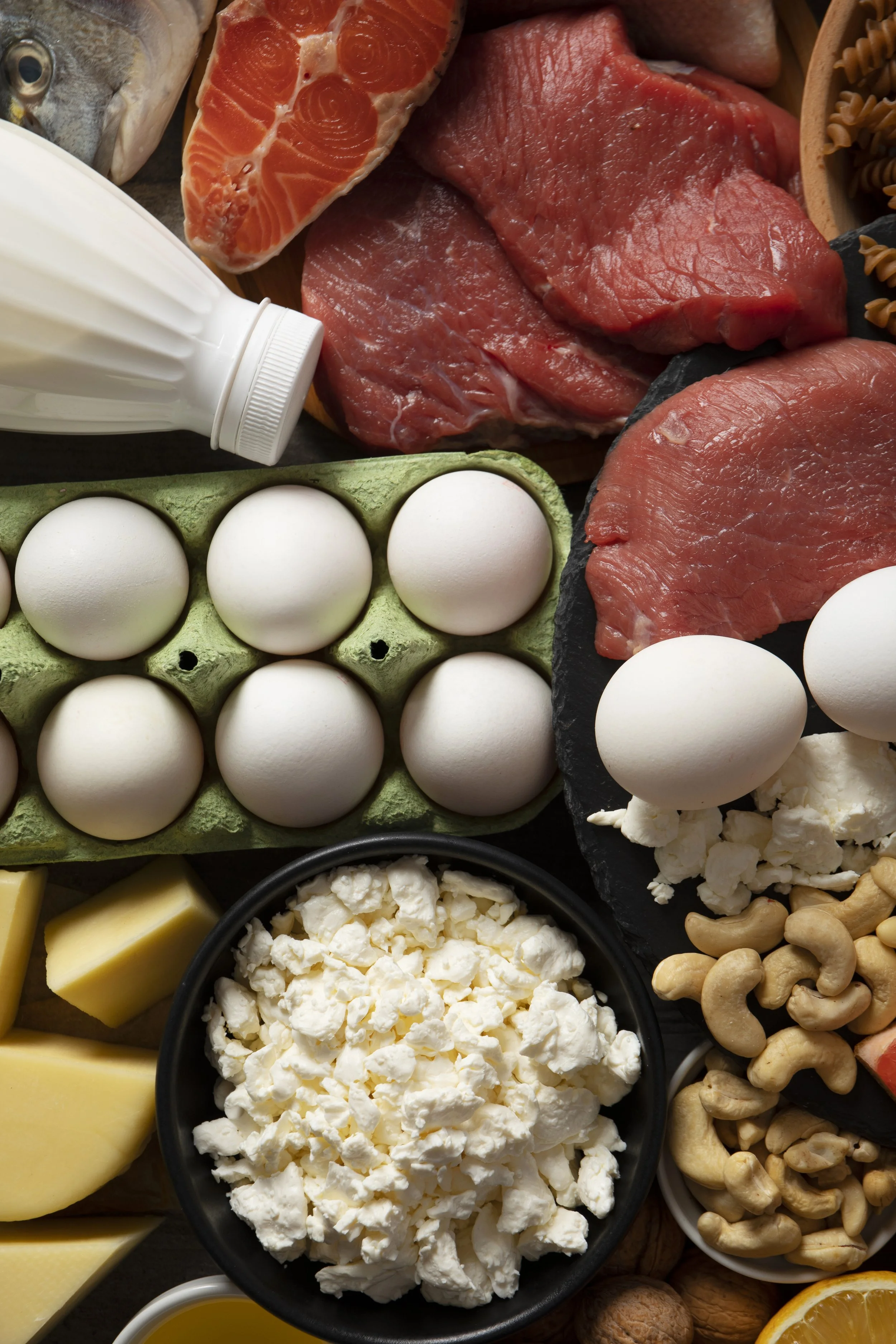
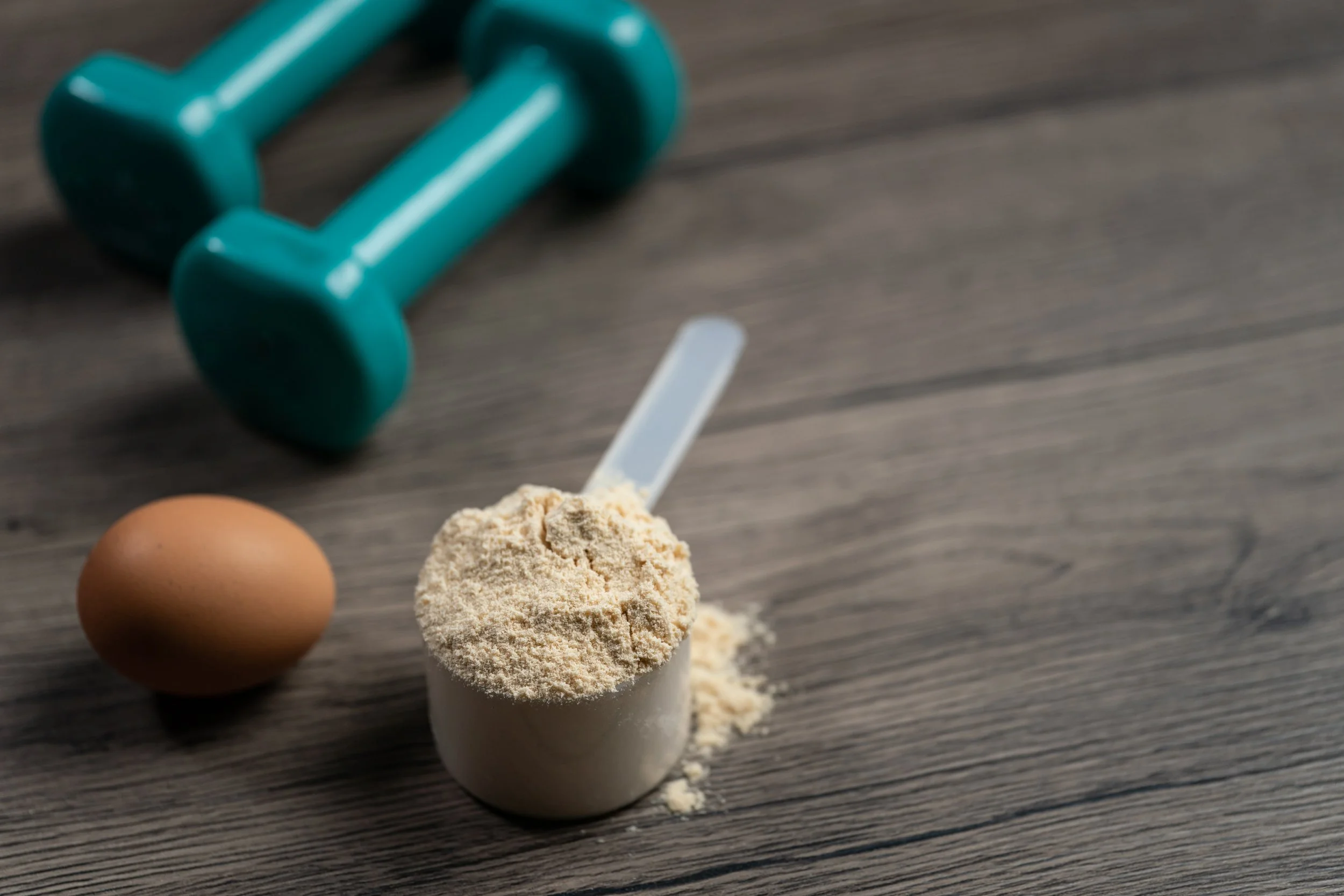
Eating enough protein kills two birds with one stone, not only does it help with the process of building & maintaining muscle mass but it is also renowned as the most satiating macronutrient. This means that you will have less cravings & feel more full, which is crucial if you’re trying to consume less calories.
I recommend creating a daily protein target so that you are giving yourself the best chance to hit your goals as possible. A good rule of thumb is to consume at least 1.2-2g of protein per kg of bodyweight per day (this will vary person to person depending on your needs).
One final thought on protein, as it can be hard to prepare with limited time, try to cook extra at dinner time so you have it ready on hand the following day. You can also use things like protein shakes & bars etc, but try not to make this more than 1/3 of your daily protein intake, as whole food is more optimal.
Fibre
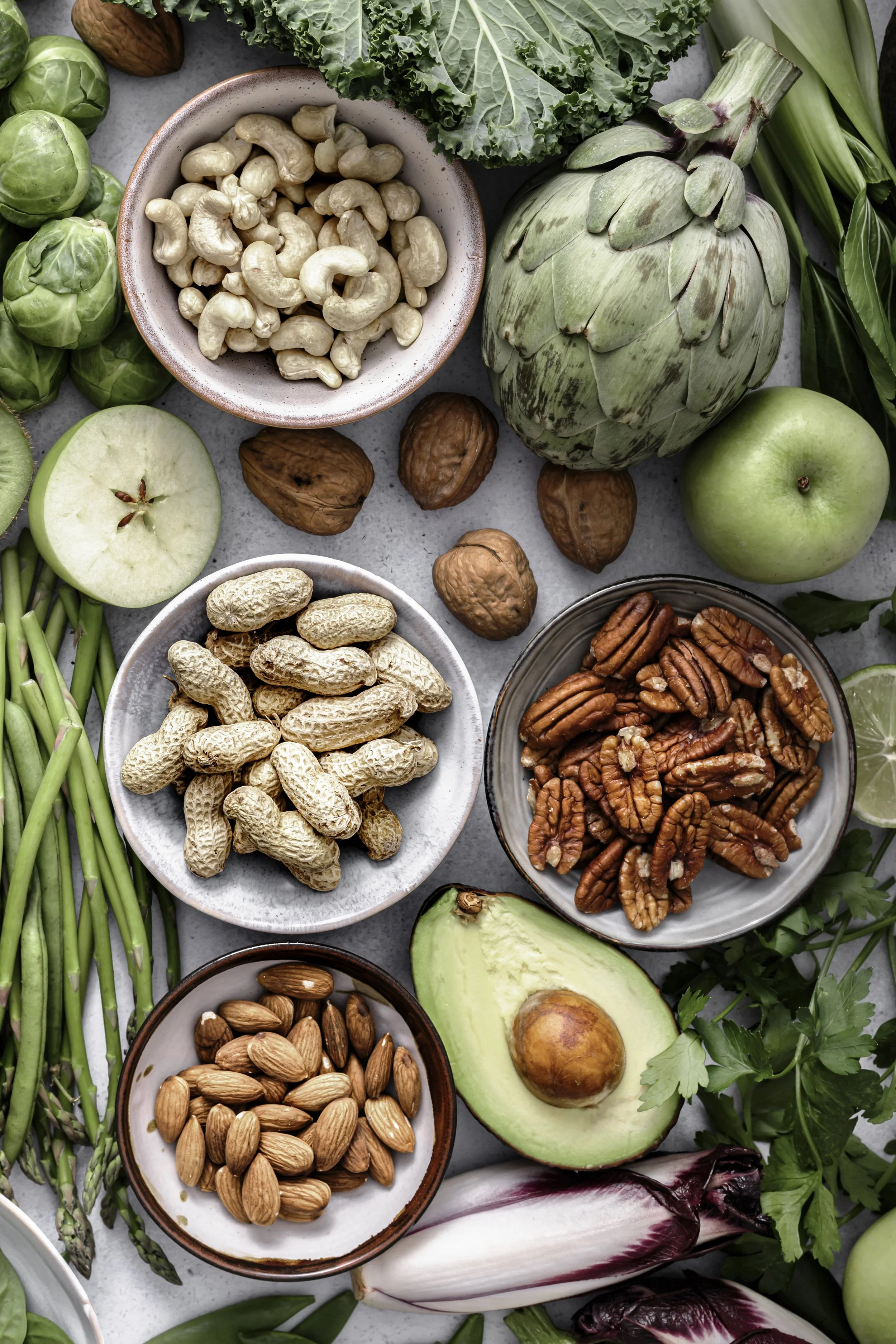
Like protein, this is another buzzword in the food marketing space. Consuming a good amount of dietary fibre will aid with things such as digestion & feeling full. There is debate out there whether consuming dietary fibre from processed foods such as breads & cereals should be considered as valuable as consuming it from unprocessed foods such as vegetables & fruits. This is above my pay-grade, but generally speaking, eating whole unprocessed foods will give you more nutrients overall whilst eating less calories. Men should aim for at least 30g of fibre per day & women 25g.
Some great sources include berries, apples/pears, lentils, broccoli, peas, carrots, sprouts, avocados, oats, chia seeds, low calorie popcorn & high percentage dark chocolate.
Water

Most people under-consume water, and their only sources of water are cups of tea or coffee. Being appropriately hydrated can make a drastic difference to how your body functions overall. I won’t go into how your electrolyte balance can impact hydration as it is very complex. But a good rule of thumb is to aim to consume more than 2-3 litres of water per day, however you may need more depending on what you do each day.
Remember that like anything with nutrition, it is just about creating good habits, if you keep a water bottle on your desk you will naturally drink far more. The bonus, if you have to get up & pee more = extra movement. Additionally, If you can choose water over calorie-filled drinks, dieting will be so much easier.
Make Eating Well = Easy
Be Prepared - If you don’t like cooking or convenience is your barrier to eating well, it’s imperative that you make things easier for yourself.
Cook multiple meals at once, utilising a wide range of your appliances at the same time; oven, air fryer, rice cooker, and stovetop. This means you can cook multiple things at once, saving you a huge chunk of time across the week. You can even cut all of your ingredients up & separate them into containers for meals ready to cook later in the week.
Make grocery shopping easy by doing it online or going in with a plan. If you eat similar meals save the ingredients under favourite orders or keep standard shopping lists. This doesn’t mean you need to eat the same thing either, but most people eat the same 8-10 meals, pair 2-3 together, and alternate each week of the month to keep things interesting.
Try eating the same meal two nights in a row. Or mix it up slightly by changing what carbohydrate you have with it i.e. noodles, pasta, rice, wraps, roast veggies, or a fresh salad. This works for lunch also if you cook extra.
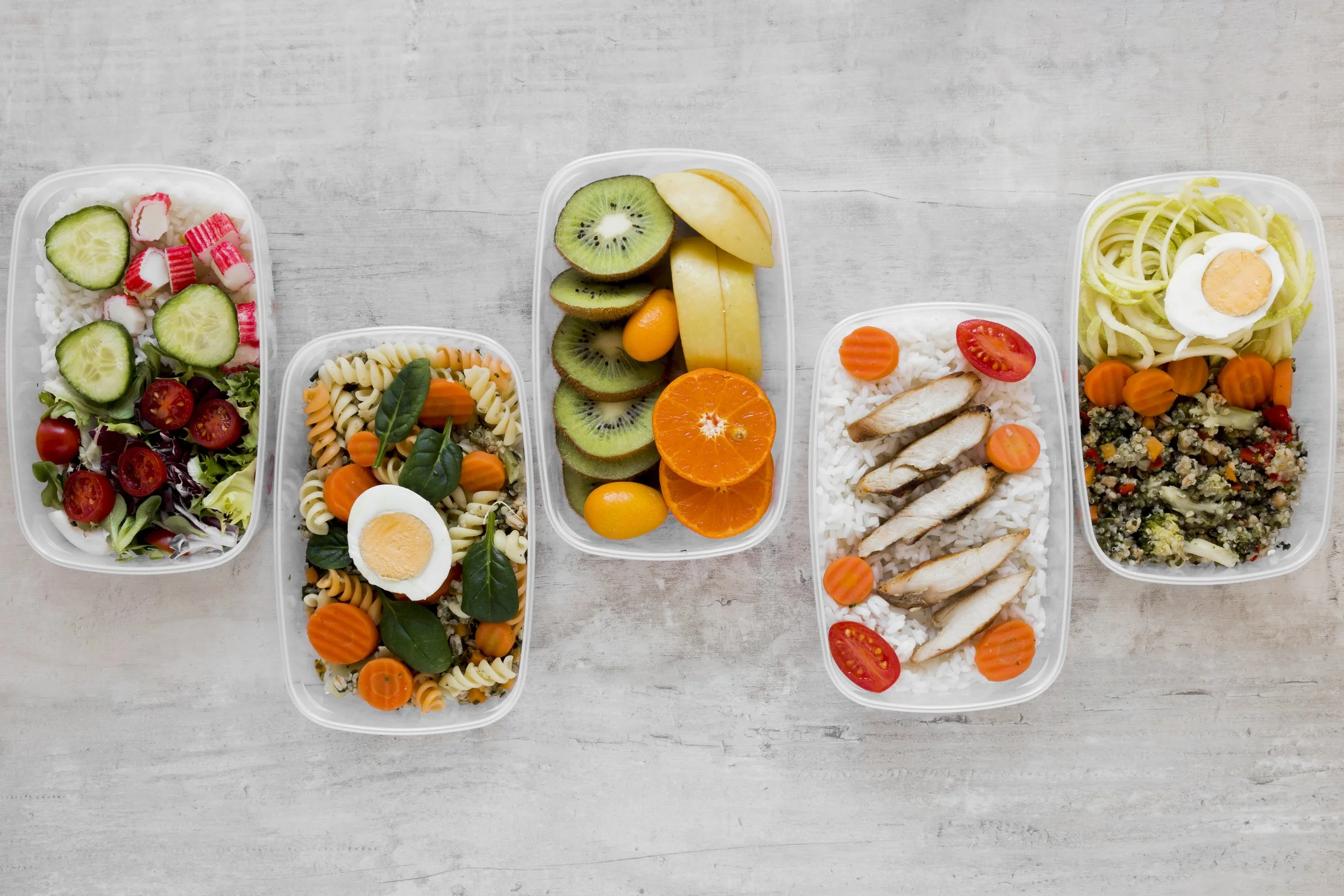
Eating Habits - Working with your biology & psychology rather than against it, can make change easier than you realise.
Eat undistracted & chew your food. In today’s world of smartphones & hustle culture, a lot of people eat whilst distracted. This can cause a myriad of gut issues & confused hunger signals. By focusing on what you’re eating & chewing adequately you will be more satisfied & your digestion will be improved by your food being broken down better. Another tip here is to put down your knife & fork until you are finished with each mouthful.
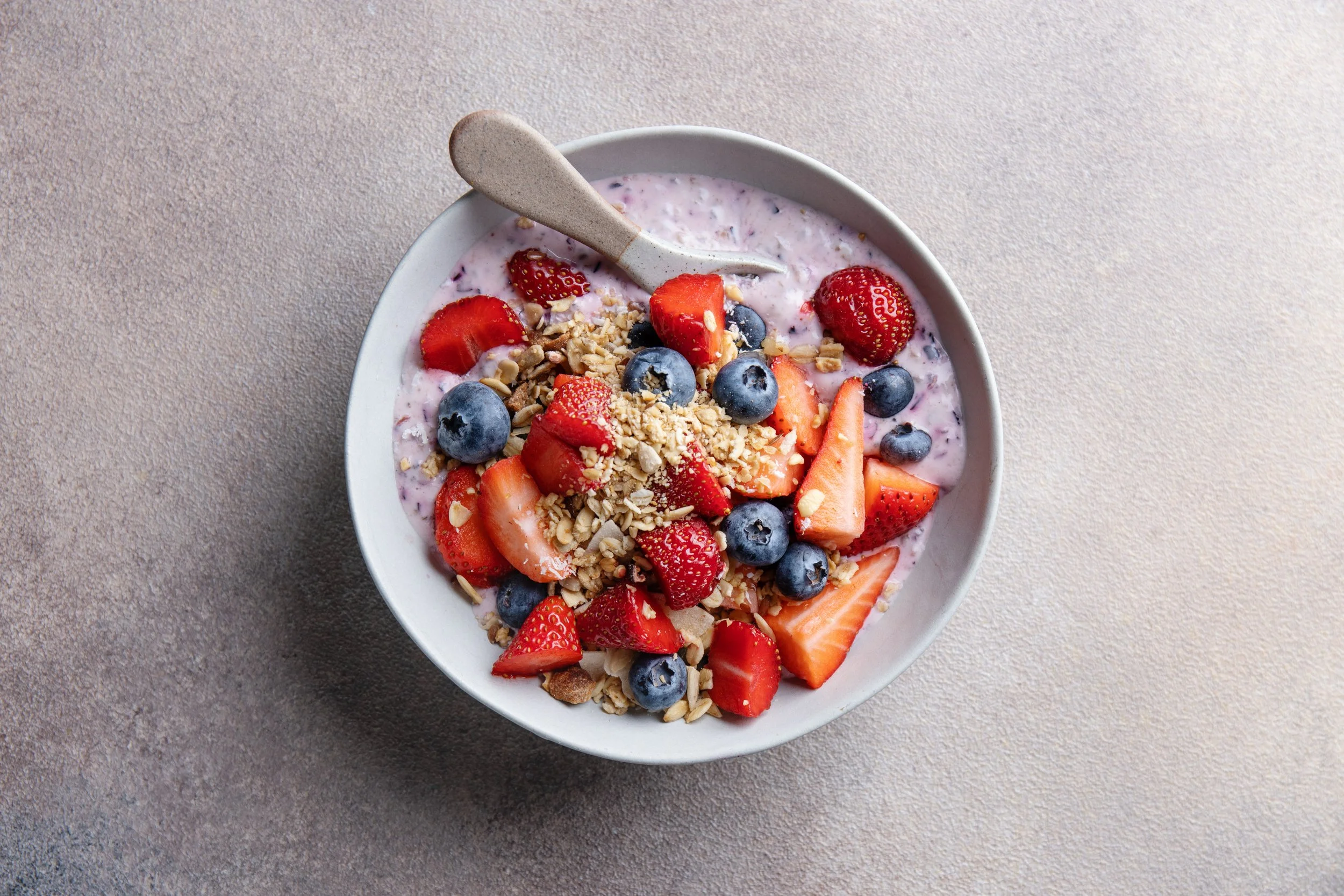
Win the first meal of the day. Whether you eat breakfast or it is your first meal at midday after your fast, ‘winning’ the first meal is crucial for setting up your day. If you struggle to hit a protein target but you have toast for breakfast, you’re playing catch-up from the get-go. Try to incorporate a high protein source, some veggies and/or fruit + some healthy fats, or slow-digesting carbs to set yourself up for success. As time is of the essence early in most people’s days, overnight oats with Greek yoghurt, smoothies, eggs, or prepared salads can be great options
Make your environment supportive of your goals. If you want to lose body fat or just improve the food quality that you eat, having plenty of highly processed snacks in your pantry is only going to make things harder. If it is in your house & convenient, you will eat it. Instead, add friction to less optimal foods by making them inconvenient. Yes, you can have the ice cream, but only if you drive 15 mins to the supermarket to get it rather than walking 15 seconds to the fridge.
Eat More Not Less?
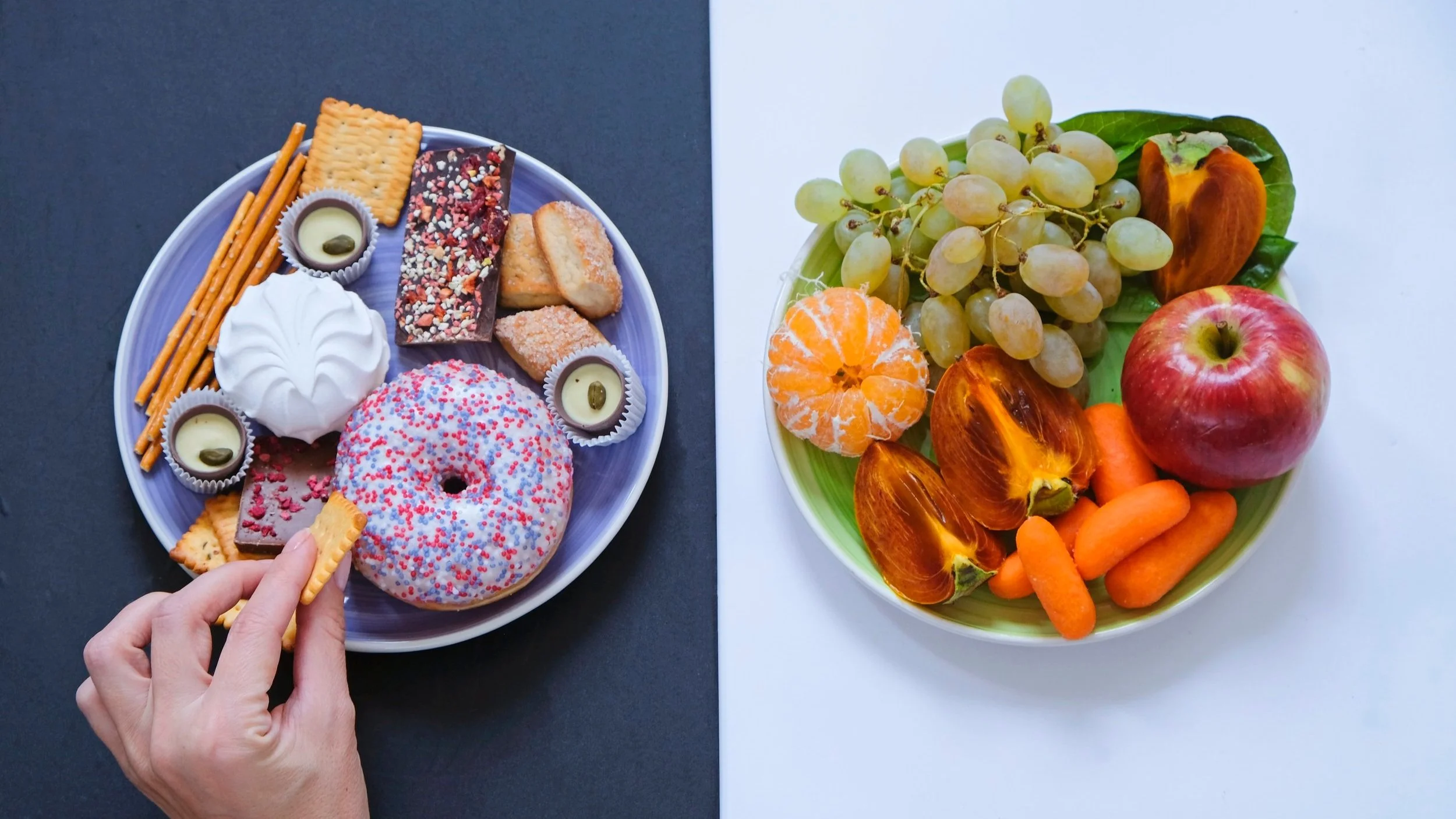
No, I’m not trying to defy the laws of thermodynamics here, but yes you can eat more food volume whilst at the same time eating fewer calories. Do this by opting for more whole unprocessed foods instead of highly processed options.
This can be a better option than just eating less of what you currently do, for a multitude of reasons:
It is more satiating, due to the sheer amount of food volume you are eating filling your stomach. This will help with eating fewer calories overall, as you will be too full to overeat.
You increase your intake of micronutrients. When ‘eating less’ people tend to consume less micronutrients also, which can hinder a wide range of bodily functions.
Mentally, you won’t feel like you are depriving yourself, instead, you will feel like you get to eat a good amount, this is crucial for making this diet change sustainable.
Ready to hear the best part?
You don’t need to only eat unprocessed foods for every meal either. There will be times when you opt for some of your calorie-dense favourites over the ‘better’ option. And that’s ok.
But by prioritising eating enough QUALITY food volume in the rest of your meals, when you do have unprocessed foods, you will be far less likely to find yourself at risk of binge eating.
This is how you CREATE a balanced and sustainable diet, not by going cold turkey on all of your favourite foods, but also not by leaving it up to what you feel like eating at that moment. Stack the odds in your favour by making it EASIER to consume less calories.
So… Where Should You Start?
Remember, the best way to get nowhere is to choose to do everything at once, trust me, I’ve tried. This is overwhelming especially if you currently don’t do anything mentioned above.
Step 1) Choose 1 of the following high-impact areas;
Water
Fibre
Protein
To get an understanding of your current habits & intake, use a journal or an app to record your current intake, this could be anywhere from 3-7 days. From there, create a target for your choice, this can be something you gradually increase to. For example, if your end protein goal is 160g of protein per day, but you currently eat only 50g, don’t just rush straight to 160g, follow a process similar to this.
Week 1 = 80g of protein per day
Week 2 = 110g of protein per day
Week 3 = 140g of protein per day
Week 4 = 160g of protein per day
Now sustain this for another 2 weeks to reinforce the habit before choosing your next high-impact area (fibre or water).
Step 2) Choose a habit that supports your barriers/goals
If you’re looking to build muscle, but struggle to eat enough protein, start with the habit mentioned above of “winning the first meal of the day”
Maybe you’re too busy with work or kids that you find eating healthy too difficult and find yourself opting for convenience foods instead… Start with the being prepared habits of “eating the same meal two nights in a row“ or “grocery shopping with a plan or online”, both of these strategies will make life easier by saving you cooking time & trips to the supermarket
If losing body fat is your goal, but you have always felt like you are either depriving yourself during a diet or are constantly hungry, try “eating undistracted & sufficiently chewing your food” or “Increasing your food volume by eating more whole unprocessed foods”. You will notice how much easier it is to eat less calories whilst feeling satisfied.
Step 3) Managing energy balance to meet your needs & goals
This is a lot more complex & I want to do this topic justice, so it will come in a follow-up resource, deep diving into total daily energy expenditure & tracking techniques such as hand-sized portions & calorie counting, etc.
First & foremost if you can improve even a few of the fundamental habits & high-impact areas I have laid out above, you may already notice major changes to your health, body composition & overall consistency.
Think of those fundamentals as layers on a cake, build those first & you’re the majority of the way there. We can later decorate the cake with more demanding skills such as counting calories.
“For changes to be of any true value, they’ve got to be lasting & consistent”
Jamie Morrison
Disclaimer
I am a certified Personal Trainer & Precision Nutrition Coach. This guide is mainly habit-based & the information comes from a mixture of learnings from the Precision Nutrition course & from personal/client experiences.
This should not be considered as medical nutrition advice, nor should It be considered as advice from a registered dietician/nutritionist, as I am neither. If you have underlying health conditions, please seek specialised advice from your doctor first before making any of the nutrition changes mentioned above.